
Garden buildings and rooms have long been touted as certain ways to add value to your property. That said, in October 2023, English planning regulations underwent a profound transformation that affects property owners considering designing and building garden buildings.
The mandatory four-year planning enforcement period, colloquially dubbed the “4-year rule” for years, has now officially been replaced by a 10-year rule, fundamentally changing how property owners approach a garden room project. This change means that any potential unauthorised projects since this planning revision automatically fall under the longer review period.
Luckily, most garden rooms do not require planning permission, but in those instances where they do, it’s prudent to understand what this legislative change means.
What changed and why it matters
The enforcement period was extended from four to ten years for any standalone operational development completed on or after the 25th of April 2024.
For example, if you’ve made changes without attaining the required planning permission, even if you didn’t realise you needed it, you may discover that you’ve made an error of judgement.
As such, any structure erected from April 2024 onwards that you retrospectively realised required planning permission, now has a longer enforcement period. Property owners, whether selling, remortgaging, insuring or renovating, must demonstrate ten years of continuous use rather than four, which may prove more difficult.
Transitioning and Exceptions
Garden buildings substantially completed before this planning enforcement change may still fall under the old four-year rule, but you’ll need solid evidence to prove it. Photographs, invoices, utility connections, building control records, and written approval from neighbours all act as valid evidence.
‘Substantially complete’ has a specific legal meaning here. A half-built frame doesn’t count. The structure needs doors, windows, roofing, and to essentially be functional. If your garden room sits in this grey area, gathering evidence now should be your top priority.
While transitional provisions may apply, it’s prudent to remember that any unauthorised works completed after the 25th of April 2024 must now comply with the 10-year rule.
Understanding permitted development
The good news is that most domestic garden rooms don’t require planning permission at all, with them often meeting the following ‘permitted development’ structure criteria:
- Stays under 2.5 metres in height when within two metres of a boundary (or 4 metres with a dual-pitched roof elsewhere)
- Covers no more than 50% of your land area around the home
- Remains single-storey and is not used as self-contained living accommodation
- Isn’t located in front of the property
- Does not contain a balcony or veranda
If your project falls within these guidelines, then you can build a garden room without planning permission and full peace of mind. That said, these rights vary significantly for listed buildings, conservation areas, and designated zones like Areas of Outstanding Natural Beauty (AONB). It’s always worth checking with your local council and appointed contractors whether your garden room project meets permitted development rights.
The 10-year rule becomes relevant when your garden room breaches the maximum thresholds. For instance, if the height limit is exceeded, or it’s located too close to the boundaries, then the window for potential enforcement action now lasts a decade.
Garden room uses and types
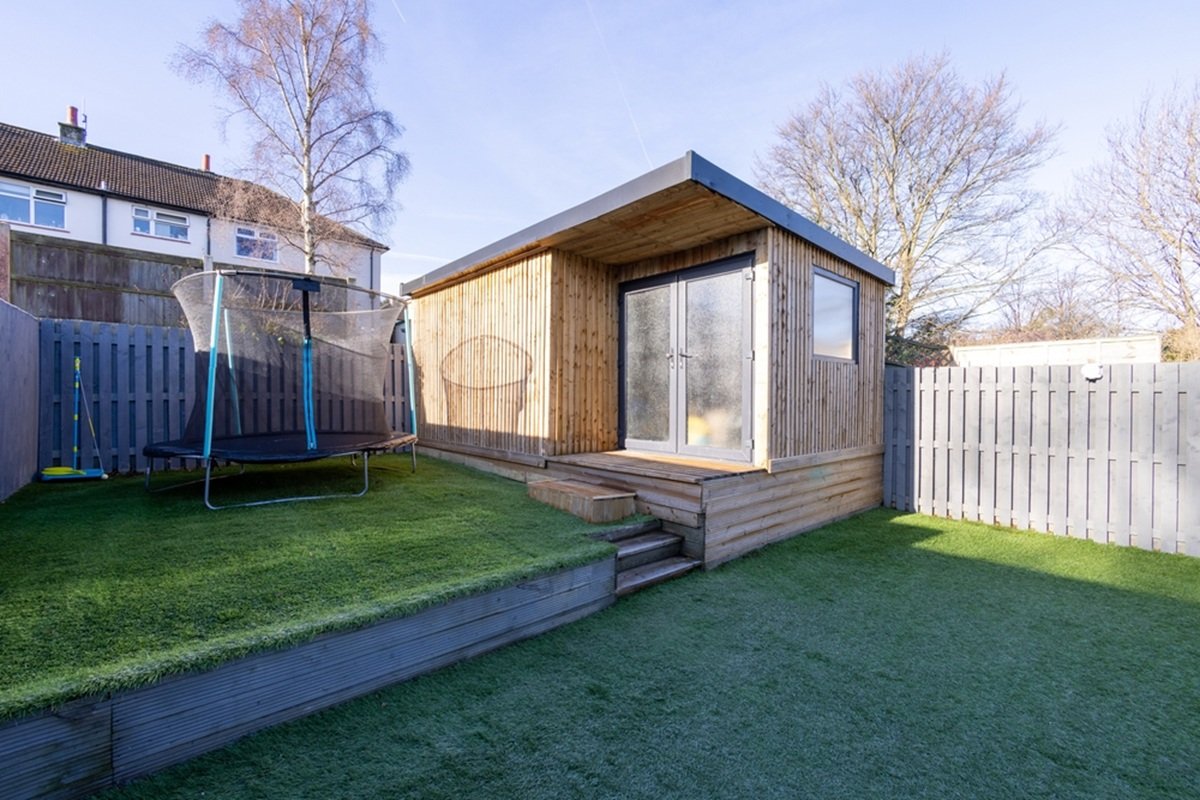
Homeowners with substantial garden space are increasingly viewing garden rooms as a valuable addition. These structures have evolved from beyond the simple shed or workshop; they now serve numerous sophisticated functions such as home offices, gyms or art studios.
However, high-specification uses require more than just a basic garden building. For instance, Golf Swing Systems specialises in bespoke garden rooms designed specifically for golf simulator installations. With such setups often requiring precise internal dimensions and higher building heights, this is a prime example of why understanding the 10-year rule and permitted development height restrictions is so vital for a successful project.
When you are aiming to create specialised spaces that go beyond “off the shelf” provisions, it’s critical to align your design with planning compliance.
Why planning compliance is non-negotiable
The extended enforcement period can have lasting ripple effects for multiple parties in the property chain:
- Unauthorised garden room buildings can delay the conveyancing process if discovered with no prior approval, and force offer price reductions or even derail sales entirely.
- Mortgage lenders warrant confirmation of planning permission before granting capital, and an unauthorised building could prevent applications for remortgaging.
- Buildings insurance may be deemed void for structures without relevant planning permission, and claims may be rejected.
- Councils can issue enforcement notices requiring garden buildings to be removed, or stop notices that pause ongoing work. They may also prosecute, and the now enhanced window of review gives them more time to take action if needed.
How to avoid enforcement action
Secure planning permission
For garden rooms that don’t meet permitted development rights and need prior approval from the local authority, it’s sensible to submit a planning application. The price of this pales in comparison to a penalty for non-compliance.
Submit site plans and elevation drawings through your council’s portal, and wait the expected eight weeks for councils to make their decision. Some may even offer pre-application advice that could improve your chances of securing approval, but these may be chargeable.
Once you’re granted permission, you’re in the clear indefinitely, while similarly providing certainty for future owners, and eliminating any risk of enforcement action.
Certificates of lawful development
For garden rooms that have already been built, and that may be subject to enforcement action, Certificates of Lawful Development (CLDs) provide formal compliance confirmation.
You can apply for certificates covering existing structures (proving they’re lawful through permission, permitted development, or enforcement immunity) or proposed developments (confirming a planned structure would be lawful under permitted development).
Obtaining a CLD requires proving your case on the balance of probabilities with evidence, such as photographs, council tax records, declarations, invoices, bills and so on.
Quick due diligence checks
Before commencing any garden room project, it’s recommended to:
- Confirm planning history and records from your local authority, which can reveal prior permissions, refused applications or enforcement notices.
- Verify your eligibility for permitted developments and check for Article 4 Directions that revoke rights in specific areas.
- Consult local planning offices with any queries, and engage planning consultants, architects and suppliers for advice.
- Maintain complete, thorough records throughout the project for complete transparency.
Building your garden structure with confidence
The new 10-year rule requires significant forward thinking and preparation. While permitted development rights still remain, any deviation requires full planning permission, and while it’s frustrating and arduous, you’ll be grateful that you prepared ahead of time. It’s comparatively modest in terms of financial commitments compared to a lower property sale value, a disrupted sales process, and enforcement penalties that may come your way if you neglect it.
Your garden room deserves to add value to your property and, more importantly, your life, and by obtaining permission well in advance, you’ll know you’re ready to embrace it with open arms.


 By Tom Fenton


 By Annie Button


