

 Compare Quotes in Minutes
 Save Time and Money
 No Hidden Fees or Commitments
 Get an Online Quote
 Get Matched with Expert Providers
 Get Support Every Step of the Way

Introduction to an Environmental Impact Assessment
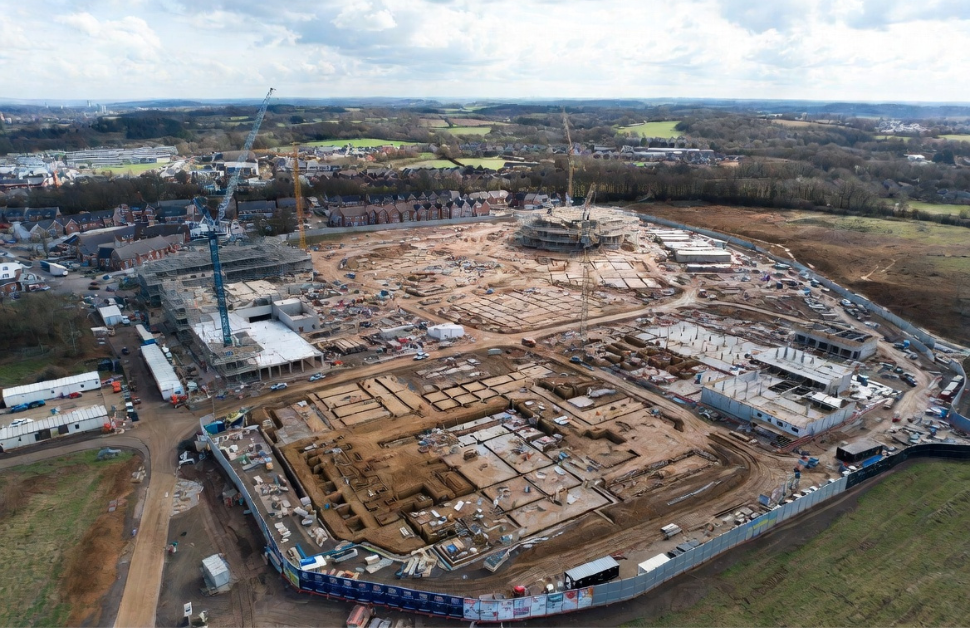
When you plan a new-build development, you need to think about how the proposed project will change the surrounding landscape.
In the case of large-scale projects or developments in an environmentally sensitive location, there will be even more of an emphasis on the possible long-term effects on the environment.
With the correct environmental assessment, you can fully understand the changes before you break ground, increasing your chances of successfully securing planning permission.
An environmental impact assessment (EIA) confirms to the local council that you have spotted any potential environmental risks and have a plan for how to manage them, working to promote sustainable development and safeguard natural assets for the future.
Based on the results of an EIA, it will be possible to meet the broad purpose of making sure that public and private projects are designed responsibly.
Benefits of an Environmental Impact Assessment
Going through the EIA process offers several advantages, including:
Enhancing Building Design
Encouraging sustainable practices to lower energy bills and running costs.
Growing Community Support
Showing local communities that the local environment is being respected, building a feeling of trust.
Identifying Problems Quickly
Fixing designs at an early stage before costs spiral through early identification.
Reducing Risks
Making time to arrange ways of bypassing issues by highlighting negative effects upfront.
Simplifying the Planning Journey
Supplying clear evidence to give decision-makers the confidence to approve planning applications faster.
Connection with an Ecological Impact Assessment (EcIA)
Many people have been known to confuse an environmental impact assessment (EIA) with an ecological impact assessment (EcIA).
An EcIA is a focused study on wildlife and habitats, based on the strict rules of the Chartered Institute of Ecology and Environmental Management (CIEEM).
While an EcIA is specifically targeted, an EIA has a wide scope, looking at other environmental factors across the site, including noise, traffic and air quality.
Environmental Impact Assessment Requirements
The UK planning system demands that we protect the countryside as we build.
With this in mind, certain projects must go through a formal review to uncover the environmental implications before works start.
The study acts as an integral part of the modern decision-making process for major builds.
Environmental Impact Assessment Legislation
The foundation for the EIA process stems from European law – specifically the amended EU directive known as Directive 85/337 EEC.
Although the UK is no longer in the European Union (EU), the core ideas from the original environmental impact assessment directive still heavily shape the rules guiding developers today.
Domestic laws also play a massive role, including how the Environmental Protection Act 1990 sets strict standards for waste management and pollution control across all development projects.
Above all else, strategic environmental assessment laws ensure that high- level development plans look at green issues long before the individual projects begin.
Under Part III of the Town and Country Planning Act 1990, certain types of developments need to comply with environmental considerations. Not only that, but if the planning project falls under other regimes, different environmental laws will apply.
As soon as the newest regulations came into force, the government also created certain transitional arrangements set out in law. Along with other arrangements, older applications for planning permission will avoid being penalised by any recent rule changes.
Environmental Impact Assessment Regulations
For developments in England, the main framework is the Town and Country Planning (Environmental Impact Assessment) Regulations 2017.
EIA regulations dictate how the environmental regulations apply, and similar rules cover the rest of the UK, across Wales, Scotland and Northern Ireland.
Originally, the European Parliament and the European Commission worked together to align the EIA directive across all EU member states.
Domestic public authorities and independent public bodies like Natural England then go on to enforce the standards.
Part of this involves protecting sensitive areas from poor planning, especially in the case of heavily guarded locations like sites of special scientific interest (SSSI) and other statutory designated sites.
The rules automatically cover large-scale developments, such as major infrastructure projects and the construction of nuclear power stations and other significant new structures.
Within rare exemptions, however, the standard EIA procedure could be bypassed to protect national security, such as if a planning project serves national defence purposes.
Stages in an Environmental Impact Assessment
The environmental impact assessment process follows a set structure to track all potential effects correctly:
Screening
Before anything at all, you should see if you need an environmental impact assessment required on your site.
Certain developments always need one, whereas other types of development are evaluated by the local planning authority on a case-by-case basis.
If you believe that an EIA is required, you can actually submit a formal note to request a screening.
The local council will then consider your development proposals against specific criteria set by the law to make a screening decision.
If the council believes that your build is likely to have significant impacts on the surrounding area, they will either issue a formal screening opinion or the Secretary of State will step in with a direct screening direction.
Scoping
Once it’s confirmed that an EIA is needed, the scoping process can start.
At the scoping stage, you can ask for a scoping opinion from the relevant planning authority to confirm what exactly the survey should cover.
By doing this, you can avoid wasting time on irrelevant issues and focus the research towards the likely significant effects and serious potential impacts from your development.
Assessment and Reporting
Competent experts will then attend the site to assess environmental impacts.
In terms of the detailed information recorded, it can cover everything from human health risks to climate change resilience and damage to cultural heritage. On top of this, they will review cumulative effects to determine how the build could interact with other nearby construction sites.
A master EIA report will be created at the end, including certain information about the likely effects of the proposed actions.
It’s known as an environmental statement, and it features a non-technical summary so anyone can read and understand the findings.
Consultation and Decision
When you hand in the completed report, the planning officer will post a public notice.
With this, there’s an opportunity for public participation in a public consultation, allowing all interested parties to view the plans and participate in the decision.
All documents are publicised electronically to ensure that the environmental information is completely transparent.
Planners will then go on to use the findings as material considerations alongside their plans to reach a final decision.
Environmental Impact Assessment Services
If you are working on the early planning of a major build, you need a team that knows exactly how to handle the process.
Known as the project proponents, the people leading the scheme cannot do this entirely alone. Instead, you need to hire consultants who have the relevant expertise to seamlessly pull all the different environmental disciplines together.
Who Conducts an Environmental Impact Assessment?
An environmental impact assessment is never a one-person job.
A lead consultant brings a mix of specialists together, including experts in ecology, noise, flood risk and further references to other areas.
Each professional looks closely at the effects on the environment to guarantee that the planning project stays within the official EIA guidelines.
Our team has a large network of different professionals. As such, we can help you with an EIA by putting you in touch with someone who can help.
How Much Does an Environmental Impact Assessment Cost?
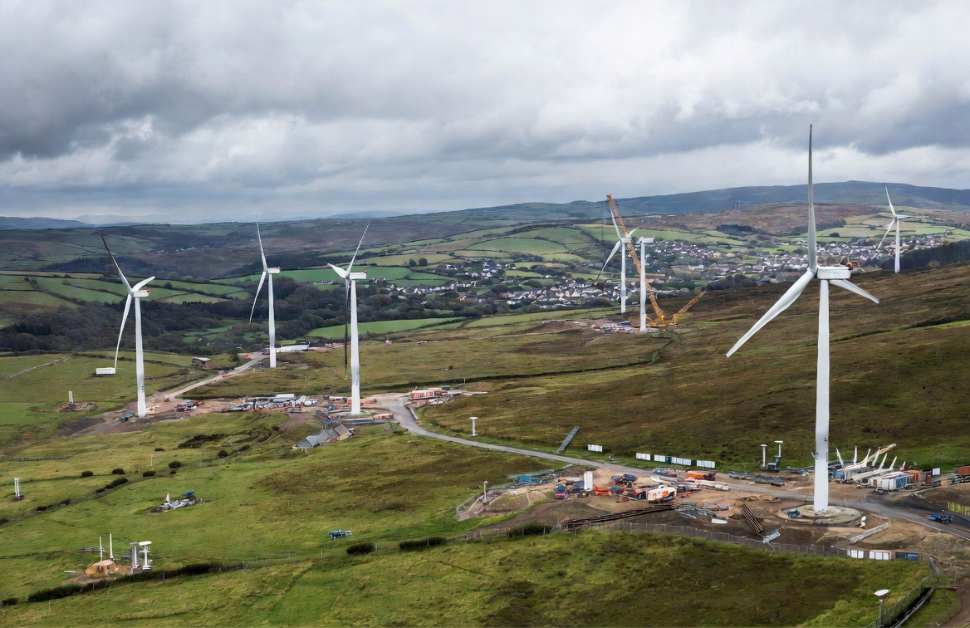
As with any surveys and reports to support planning, the price of an environmental impact assessment will vary depending on the size and location of the development. For instance, a massive renewable energy site like a wind farm will naturally cost more to assess than a mid-sized housing scheme.
On top of that, other factors can add to the overall cost. If you are building near protected areas and sensitive locations, for example, you will need to offer sufficient information as proof that you are building responsibly, or come up against fines and delays.
It’s important to plan ahead based on the relevant survey seasons, as missing it can be extremely time-consuming, and it means waiting for the next opportunity. Even then, you will need to retrieve the necessary information to show that you will not cause permanent environmental damage, potentially racking up a lot in the cost for each field survey.
More than anything, we would always recommend getting a quote as early as possible, regardless of what service you need.
By doing this, you can have everything set out ahead of you, prevent any avoidable delays, and get the additional information you need long before you need it.
Support from an Environmental Impact Assessment Consultancy
Working through your development is far simpler with the help of the right consultancy, especially if you need something like an environmental impact assessment.
A partner we work with has undertaken countless EIAs and can help you in a timely manner, with an emphasis on getting your project moving forward.
From producing mitigation measures and compensation measures to avoid any significant effects arising from your build to eliminating negative impacts to protect public health, the company we work with can do it all.
For further information on how the team we work with can help and a better understanding of the likely impacts on your application, get in touch today. Related links are available on our website, or you can call, email or complete a quote form.