

 Compare Quotes in Minutes
 Save Time and Money
 No Hidden Fees or Commitments
 Get an Online Quote
 Get Matched with Expert Providers
 Get Support Every Step of the Way

Biodiversity Net Gain: Improving the Natural World
The introduction of biodiversity net gain bng legislation means that development projects must leave the environment in a measurably better state than they found it.
To comply with the requirements for biodiversity net gain Milton Keynes, planning applicants must provide the local authority with a biodiversity supplementary planning document alongside a planning application.
Biodiversity net gain explained
The biodiversity net gain concept arose from the need to reduce the dramatic decline in the UK’s wildlife. National government bng principles were introduced into the National Planning Policy Framework to lessen the negative impact of development on the natural environment through biodiversity loss. The planning system now imposes a legal duty on developers to demonstrate that a site will deliver measurable improvements to biodiversity on completion and that the improvements will be maintained for the long term – at least 30 years.
Biodiversity net gain was introduced in the Environment Bill, which became the Environment Act 2021 when it received royal assent. Before planning permission is granted, the Act requires a scheme to prove that a 10% minimum measurable increase in biodiversity can be achieved on-site. A biodiversity net gain plan will provide this information by reference to the latest version of the Defra metric 4.0 which gives a measured bng reading.
Following a two-year transition period, Natural England announced that mandatory biodiversity net gain would apply from November 2023 in England for major sites and small sites of nine units or less, and from April 2024 it applied to smaller sites (less than 0.5 hectares) and commercial developments under 1,000 square metres. As well as being a key consideration of national planning policy, bng aligns with Environment Agency goals for the UK to reduce biodiversity losses and enjoy improved levels of biodiversity in the natural environment.

Biodiversity net gain principles in Milton Keynes
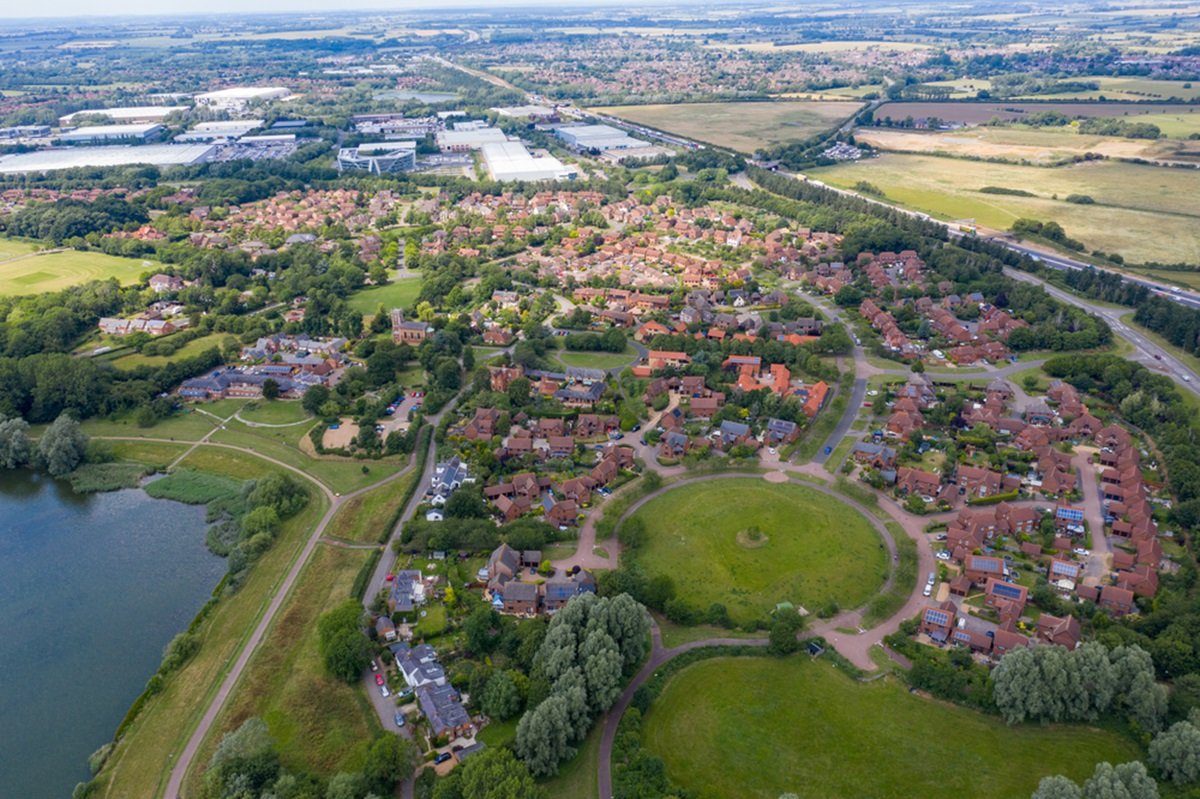
Plan:MK 2016-2031 outlines Milton Keynes’s ambition to be known internationally as a great city to live and work in by 2031, with a green and spacious layout. It’s one of the UK’s greener cities with high environmental standards, and to maintain this reputation, it will be protected from inappropriate development; however, certain areas will be regenerated along with new housing in both urban and rural areas.
The Plan aims to make Milton Keynes the hub of the Cambridge-Milton Keynes-Oxford growth corridor, and development along this corridor will be supported. Plans include delivering land for 26,500 houses in the borough between 2016-2031.
In line with the National Planning Policy Framework’s policies on sustainable development, green infrastructure is a key part of Plan:MK, which focuses on providing green spaces such as parks along river valleys running through the city, which provide flood water storage and recreational space. The Plan includes measures to protect and enhance habitats found in the natural environment, such as the Ouse Valley, Loughton Brook Valley, Tattenhoe Valley, and Emberton Country Park.
Land management decisions in these areas have strategic significance: local plans can often support connective corridor provision to help species thrive and support life in many habitats. The area includes two Sites of Special Scientific Interest – Howe Park Wood and Oxley Mead, and a small section of Yardley Chase on the border with Northamptonshire and Salcey Forest just inside Northamptonshire. Other wildlife sites and Local Nature Reserves include The Blue Lagoon and Bletchley.
Prevent biodiversity losses
Working with various partners, The Buckinghamshire and Milton Keynes Natural Environment Partnership aims to protect wildlife habitats, and support important biodiversity net gain and priority species. Buckinghamshire Council and Warwickshire County Council work closely with Milton Keynes City Council on schemes for increasing biodiversity across their areas and protecting important habitats.
New developments must mitigate flood risk through water management systems and planned green infrastructure provision. As some areas are at risk of flooding and climate change is set to increase this, future development must incorporate methods of slowing flows and using more sustainable drainage features. All new developments must be set back 8m from any main rivers and at least 9m from other watercourses as advised by the Environment Agency.
The bng assessment
A biodiversity net gain survey involves an ecological consultant visiting the proposed development site to record all relevant features such as European-protected species of wildlife and habitat, trees and hedgerows. If specialist surveys for protected species are required, the consultant can give further information. The survey findings will be logged into the latest version of the universal biodiversity metric developed by the Department for Environment, Food and Rural Affairs, and a calculation will be made of the site’s current ecological value.
The consultant will then assess the environmental improvements in the development plans to counter biodiversity losses on site, enabling a calculation of the site’s biodiversity value after development. When this data is entered into the biodiversity metric, a comparison can be made between the two figures, allowing the consultant to work out how much improvement is required to make the figures correspond and then add a minimum 10% increase in on-site biodiversity. The recommended measures will be made according to a bng mitigation hierarchy and may involve land management changes or creating new habitats; an applicant may have to alter existing requirements of the original scheme.
How to comply with the biodiversity net gain requirement
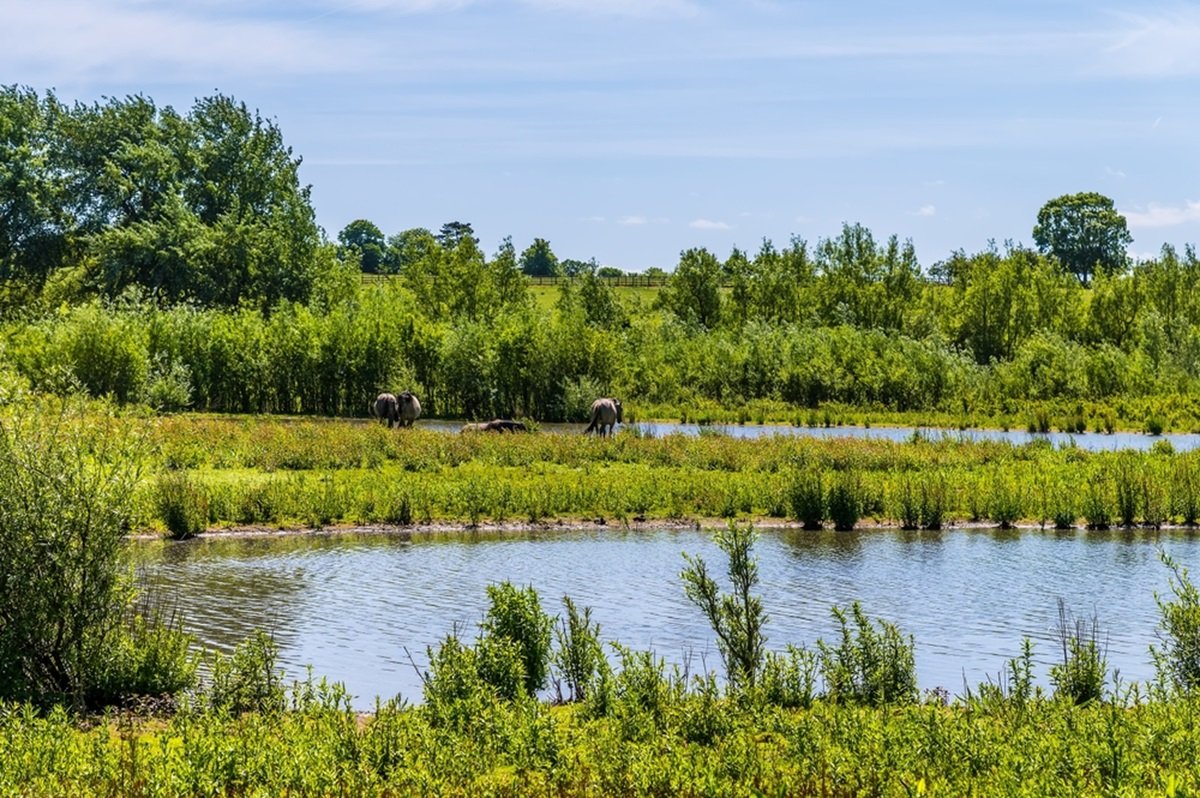
Delivery of net gain on-site is the preferred option according to national policy; typical methods to boost biodiversity value include creating new habitats to aid nature recovery or installing bat boxes or bird boxes to protect wildlife from disturbance. If there is limited scope for mitigation hierarchy gains to be made on-site, in certain cases the best option may be to deliver bng off-site, or biodiversity units may be purchased as a last resort.
Biodiversity offsets can have strategic significance if units are allocated to important habitats where improving biodiversity forms part of a local nature recovery strategy, such as a habitat bank. Offset sites can also create wildlife habitats with high biodiversity value supporting a wide range of living things.
A local planning authority will rely on the biodiversity net gain report when deciding whether to grant planning consent. Anyone ignoring bng requirements when making a planning application may experience delays with their development proposals or unlimited fines.
Biodiversity net gain plans in Milton Keynes
A bng supplementary planning document is now a key part of the decision-making process for Milton Keynes City Council when it comes to granting planning permission.
Engaging an ecological consultancy that employs fully qualified consultants with experience in bng requirements will enable you to receive the best advice about designing development proposals that will be approved by local authorities.
The biodiversity net gain assessment will identify the best ways of improving biodiversity following losses on site and outline how consent can be achieved, alongside providing net biodiversity gain to benefit the natural environment.