

 Compare Quotes in Minutes
 Save Time and Money
 No Hidden Fees or Commitments
 Get an Online Quote
 Get Matched with Expert Providers
 Get Support Every Step of the Way

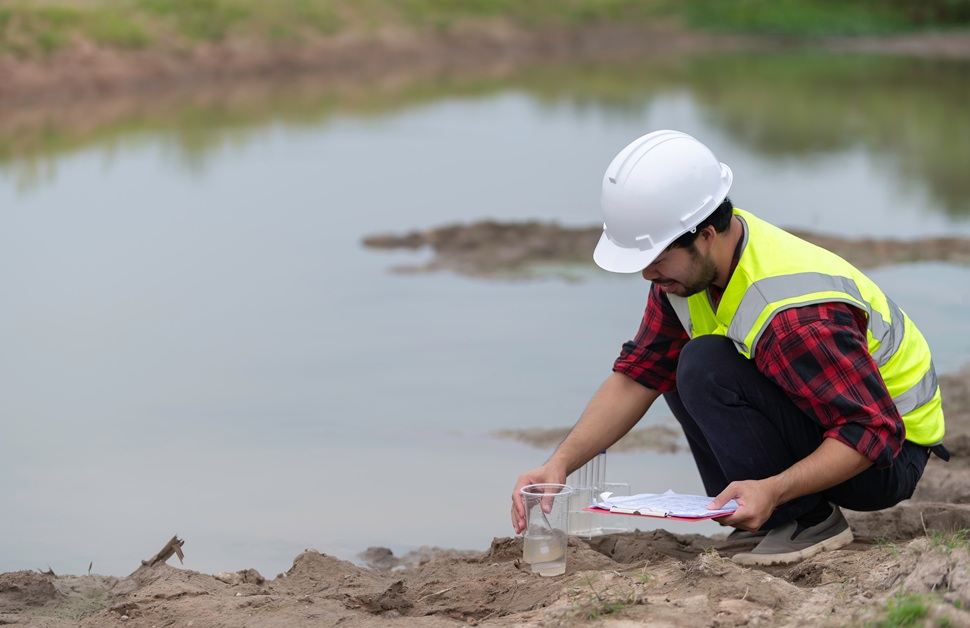
Risk Management for Contaminated Land
Brownfield sites, previously developed land and areas near historical landfills or mine workings are capable of containing harmful substances.
If left untreated, the contaminated sites can result in significant risks to controlled waters and other components of the water environment, human health and the wider environment.
Not only that, but the National Planning Policy Framework (NPPF) and Part 2A of the Environmental Protection Act 1990 insist on adequate management throughout the development process.
Pollutants from hazardous ground gases and landfill gas (such as carbon dioxide), contaminated soil and groundwater contamination can be dangerous, causing short or long-term harm to people and natural assets they come into direct contact with, often via inhalation or dermal contact.
Due to the regulatory requirements, a contaminated land officer will often insist on a phased approach to ensure that the project remains compliant.
On top of that, planning conditions from local planning authorities insist on sufficient management to check that an affected planning project remains compliant, safe and sustainable.
Ongoing support is available in the form of contaminated land risk management.
What is Contaminated Land Risk Management?
Contaminated land risk management follows a tiered approach and a process for addressing the potential impact of the environmental risks posed to a development site by land contamination.
A geo-environmental consultant will consider the land contamination risks and produce mitigation measures and a remediation strategy using modern remediation techniques to cater to any and all concerns.
After a thorough contaminated land assessment of the brownfield land, the management process will consider regulatory compliance documentation, remediation strategies and post-remediation monitoring.
A prior contaminated land risk assessment will uncover hazardous substances that could cause an unacceptable risk to humans, water quality, wildlife, ecosystems, soils, wetlands, and controlled waters such as drinking water supplies, groundwater and surface water.
With an idea of how contamination could adversely affect the site and impact the intended land use, managing risks will then be possible via land risk management, allowing development proposals to proceed safely.
Requirement for Risk Management
At any point that a preliminary risk assessment report for contaminated points out pollutants that could significantly impact a development site and the people, wildlife or environment within it, further land contamination risk management (LCRM) may be required.
The level of detail around managing proven contaminants is an essential part of maintaining land quality and avoiding environmental harm/statutory liability.
Alternatively, risk management could be necessary for development proposals set in areas of groundwater pollution, mining sites or particular sensitivity to surface water. It is a specific requirement for developments in urban areas, near underground storage tanks or near special protection areas (SPAs).
It would also be a likely part of urban regeneration schemes across Great Britain and Northern Ireland, the redevelopment of polluted sites, developments affected by climate change impacts that could alter contaminant migration patterns, and any different requirements set by the local authorities, the Environment Agency (EA) or another applicable regulator.
Applicable Clients
- Environmental Consultants
- Environmental Engineers
- Housing Associations
- Infrastructure Developers
- Landowners
- Local Councils
- Planning Consultants
- Property Developers
Stages in Contaminated Land Risk Management
Meeting site-specific remedial targets is possible as long as the management plan reduces potential risks, checks mitigation measures against quantitative risk assessments, and determines if any further surveys are necessary as a result of the change to site conditions.
It should also address any associated assumptions from the environmental risks identified in the initial preliminary risk assessment and intrusive investigation.
The qualitative assessment will aim to pick up additional information from the site to address all potential exposure scenarios, such as the potential for consuming contaminated food grown on the site.
Read more about the production of a land risk management plan in the space below:
Contaminated Land Risk Management Evaluation
Before a geo-environmental consultant can create a management plan for contaminated land, a stage 1 desk study is needed to collect data on the environmental setting, and potentially undertake a site walkover or site reconnaissance to help build the initial conceptual site model.
1. Review of Risk Assessment Outcomes
Reading through and analysing the results from the preliminary risk assessment, generic quantitative risk assessment (GQRA), detailed quantitative risk assessment (DQRA) and other site-specific information from surveys in the further assessment process.
2. Creation of Risk Management Strategy
Tailoring a strategy to the specific site conditions based on the site-specific assessment criteria, generic assessment criteria, health criteria and any confirmed contaminant linkage; forming a detailed understanding of the current land to prevent regulatory action later on.
3. Implementation of Mitigation Measures
Suggesting suitable measures, such as capping, soil removal, installation of ground gas protection or groundwater treatment.
4. Verification and Monitoring
Using validation sampling, post-remediation monitoring and reporting to the local planning authorities and the Environment Agency (EA) to manage the site, assess risks and ensure that the water environment is protected.
5. Ongoing Compliance and Documentation
Continuing review of the site to ensure it complies with planning conditions and mitigates the potential impact on such things as drinking water supplies, ecosystems and surface water.
Essential Concerns
In the risk-based approach for the management of contaminated land, the essential concerns for the geo-environmental consultant carrying out the inspection include the following information:
- Account of potential liabilities – effect on controlled waters or neighbouring properties
- Consideration of long-term stewardship – use of post-remediation monitoring and validation
- Details of the site – whether it involves brownfield areas, greenfield areas or a mix of the two
- Several reasons for risk management – environmental, regulatory or planning pressure
- Timing of project – many cases of planning ahead to avoid further action, reduce costs, prevent delays and bypass any chance of failure
Contaminated Land Risk Management Strategy
With the risk assessment process complete, a contamination land risk management strategy can be created to indicate the next steps.
The primary aim of the strategy is to outline how the development will be able to continue without endangering humans, controlled waters and the environment.
For instance, a strategy would generally include a case study and a summary of results from the earlier intrusive site investigation, including ground gas assessments and land risk assessments, as well as information around heavy metals and other identified hazardous substances.
It will also include a timetable of current site activities, a list of different types of potential liabilities and health risks alongside agreed sufficient solutions, records of historical mapping, and the confirmed methods for measuring and verifying success.
The completed land contamination strategy should then be submitted to the local planning authority along with the planning application, as it will include enough information to remove any remaining concerns and give the planning officer every reason to give the go-ahead.
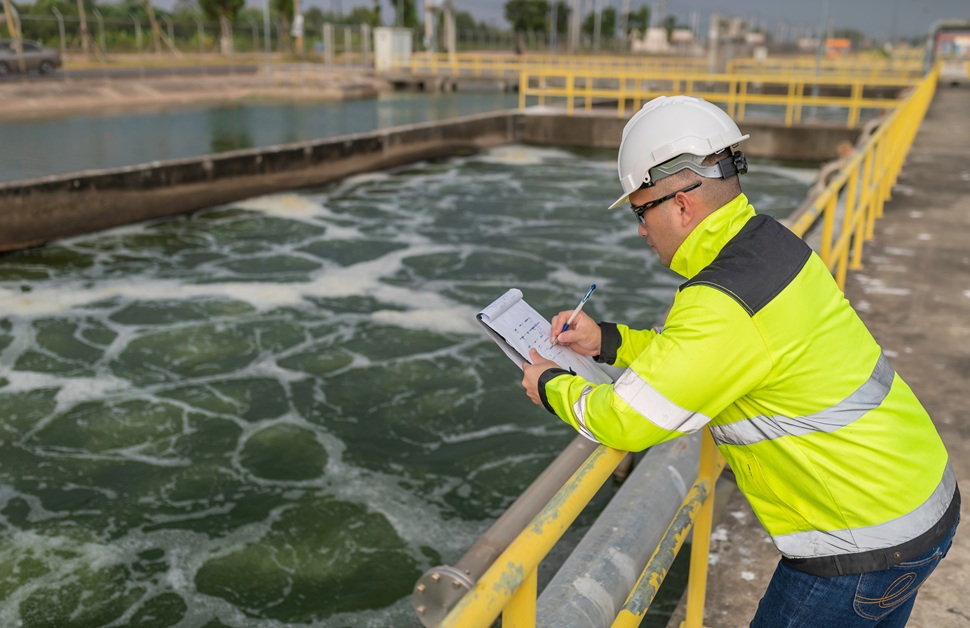
Professionals in Contaminated Land Risk Management
We provide clients with a full spectrum of land risk assessments and management solutions to benefit both greenfield and brownfield sites.
In everything we do, we guarantee compliance, safety and long-term viability, addressing human health, controlled waters and site-specific sensitivities to ensure that no unacceptable risk remains.
Based on past work, we’ve created a proven track record for delivering complex risk-based land strategies that meet local authority and Environment Agency standards, as well as the parameters set by Part 2a of the Environmental Protection Act 1990.
By signing our team up for groundbreaking training courses, we ensure that we’re up to date with new and effective ways of dealing with contaminated land.
Contaminated Land Risk Management Near Me
If you need help with contaminated land risk management and a strategy that will ensure your development isn’t hindered by harmful substances, speaking to our team would be the best route to take.
We possess extensive experience in helping developers, planning consultants and local authorities across the UK with issues caused by contaminated land, even if it simply means confirming that it poses no threats to the environment or people in the vicinity as a precautionary measure.
All of our services are made as cost-effective as possible by pricing up the necessary solutions based on the specifications of the site and project, and situating geo-environmental consultants in all parts of the country.
You can completely bypass any uncertainty by speaking with our team on our contact page, calling us or emailing us, and allowing us to create a free quote using your details.
At that point, we will be able to decide what services are best suited and plan a date to get started and help you with getting planning permission.